


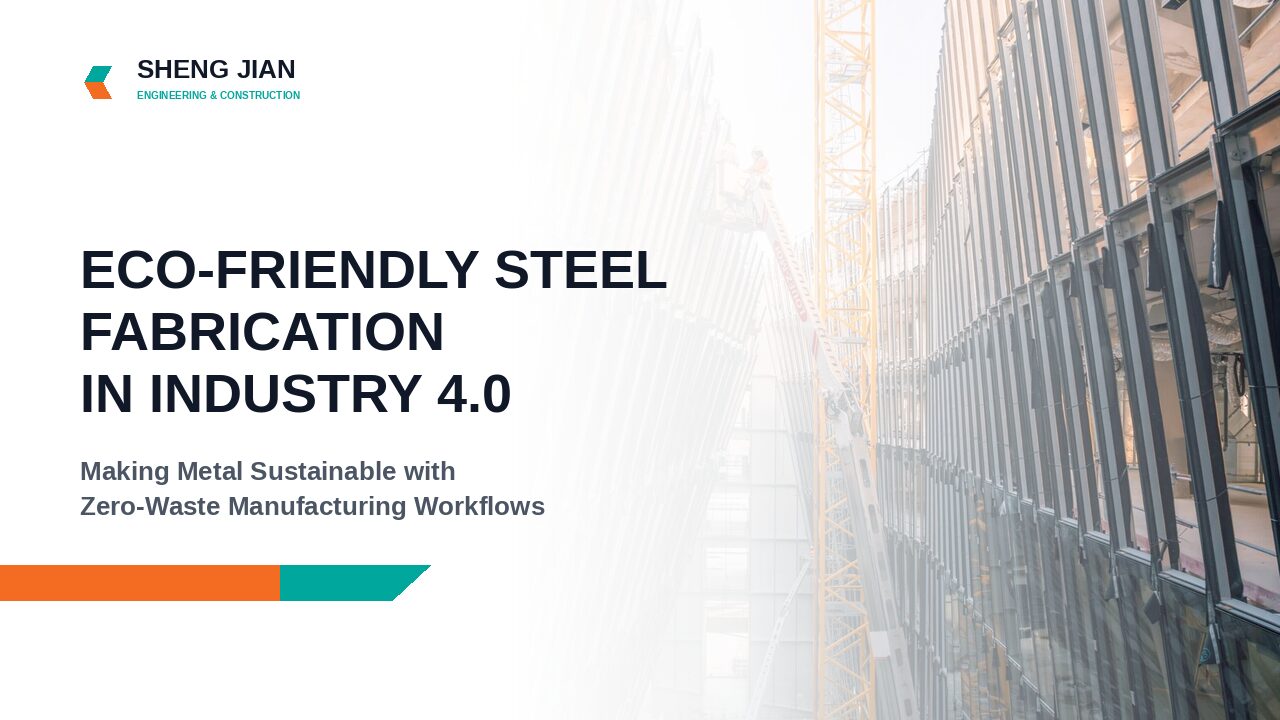
13 Aug Sustainable Steel Fabrication & Industry 4.0
Sustainability and digital automation are reshaping the global manufacturing and heavy construction sectors. As Malaysia advances its industrial roadmap toward net-zero carbon emissions by 2050, commercial developers and industrial plant owners are seeking ways to reduce the environmental impact of new facility construction. Central to this transition is green steel fabrication—combining eco-friendly metalworking practices with Industry 4.0 smart workshop technologies.
Structural steel is one of the world’s most circular construction materials. By optimizing shop floor workflows, adopting automated energy-efficient machinery, and eliminating raw material waste, modern steel fabrication plays a pivotal role in sustainable infrastructure development.
Pillars of Sustainable Metalworking & Industry 4.0
Transitioning to eco-friendly fabrication requires integrating smart software, energy-efficient machinery, and sustainable chemical practices across the entire production lifecycle.
Key sustainability initiatives in modern fabrication yards include:
- Automated Material Nesting: Utilizing advanced CAD/CAM nesting algorithms to maximize plate usage, significantly reducing off-cut scrap metal
- Circular Economy Compliance: Aligning steel recycling and scrap recovery practices with global benchmarks set by the World Steel Association
- Low-Emission Surface Treatment: Adopting water-based, ultra-low VOC (Volatile Organic Compounds) protective primers and eco-conscious hot-dip galvanizing lines
- Energy-Efficient Workshop Machinery: Upgrading to fiber laser cutters and electric-servo press brakes, supported by energy management programs from Tenaga Nasional Berhad (TNB)
The Role of Structural Steel in Green Building Certification
Using sustainably fabricated structural steel helps industrial facilities earn points under recognized green building rating frameworks, such as GBI (Green Building Index) and LEED (Leadership in Energy and Environmental Design). Because steel structures are 100% recyclable, highly durable, and easily demountable for future re-use, they provide significant lifecycle carbon savings compared to traditional cast-in-place concrete.
Make Metal Sustainable with SJEC
At Sheng Jian Engineering & Construction (SJEC), our founding philosophy is to “Make Metal Sustainable.” By combining modern CNC automated fabrication with strict quality and environmental management, we help our clients build durable, high-performance industrial assets responsibly.
Explore our green steel fabrication capabilities on our industrial construction page or contact SJEC to discuss your sustainability goals.
FAQs
How can steel fabrication become more sustainable?
Sustainable steel fabrication can include optimized material nesting, scrap recovery and recycling, lower-emission coating systems, and energy-efficient workshop machinery. Together, these measures can reduce material waste and the environmental impact of fabrication activities.
Can structural steel contribute to green building certification?
Structural steel can support green building objectives because it is durable, recyclable, and suitable for future modification or reuse. These lifecycle characteristics can contribute to sustainability strategies used under frameworks such as GBI and LEED.