


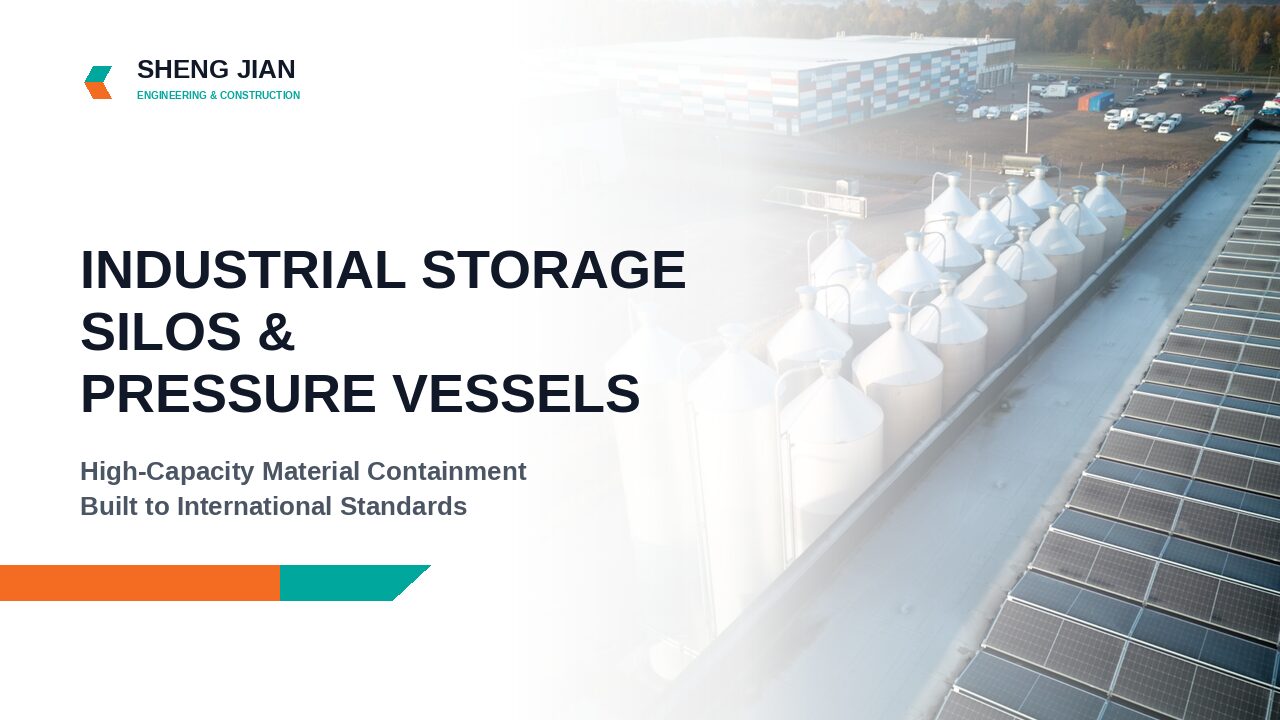
13 Aug Custom Heavy Industrial Storage Silos & Pressure Vessels
Heavy industrial storage silos and certified pressure vessels are essential containment assets across chemical plants, palm oil refineries, cement factories, and gas processing operations. Storing volatile chemicals, pressurized gases, or high-density bulk solids requires structures engineered to endure extreme internal pressures, corrosive environments, and dynamic material loads without structural failure.
Given the high operational risks associated with pressure containment and bulk storage, manufacturing these heavy steel vessels demands uncompromising engineering discipline, certified welding procedures, and rigorous quality inspection.
Code Compliance & Pressure Vessel Engineering
Pressure vessels operate under intense internal or external fluid pressure. A failure in vessel shell integrity can result in catastrophic industrial accidents. Therefore, designing and constructing process vessels must strictly follow international codes such as the ASME Boiler and Pressure Vessel Code (BPVC).
Critical engineering requirements for pressure vessels include:
- Precise plate thickness calculations accounting for working pressure, fluid density, and corrosion allowances
- Certified material selection, including carbon steel, 304/316 stainless steel, and high-nickel alloys
- Integration of certified pressure relief valves and safety systems aligned with PETRONAS technical standards
- Post-Weld Heat Treatment (PWHT) to relieve internal mechanical stresses in heavy steel walls
Engineering Bulk Industrial Storage Silos
Industrial silos designed for bulk dry materials like cement, fly ash, grains, or plastic pellets face unique structural challenges. Unlike liquid tanks, solid materials exert both vertical and outward lateral pressures against silo walls.
Key silo engineering considerations include:
- Hopper Angle Optimization: Designing conical or eccentric discharge hoppers to ensure mass flow and prevent material bridging or ratholing
- Plate Rolling Precision: Utilizing heavy 3-roll bending machines to form perfectly cylindrical shell rings with high dimensional accuracy and tight alignment tolerances
- Wear-Resistant Linings: Installing abrasion-resistant steel plates inside impact zones to prolong service life
100% Non-Destructive Testing (NDT) & Quality Assurance
Before any vessel or silo leaves the fabrication yard, structural welds must undergo comprehensive Non-Destructive Testing (NDT). Techniques such as Radiographic Testing (RT), Ultrasonic Testing (UT), Magnetic Particle Inspection (MPI), and Hydrostatic Testing ensure every seam is completely free of internal defects.
At SJEC, our Ipoh fabrication facilities are fully equipped to design, build, and test heavy silos and certified pressure vessels. Learn more about our custom fabrication services on our factory building page or connect with SJEC today.
FAQs
What standards are important when fabricating pressure vessels?
Pressure vessel design and fabrication must follow the applicable engineering code and project specification. The draft specifically references the ASME Boiler and Pressure Vessel Code, together with requirements for material selection, pressure relief systems, corrosion allowances, welding procedures, and heat treatment where required.
What non-destructive testing methods are used for silos and pressure vessels?
Depending on the vessel specification, quality validation can include Radiographic Testing (RT), Ultrasonic Testing (UT), Magnetic Particle Inspection (MPI), and hydrostatic testing to verify weld integrity and pressure containment.