


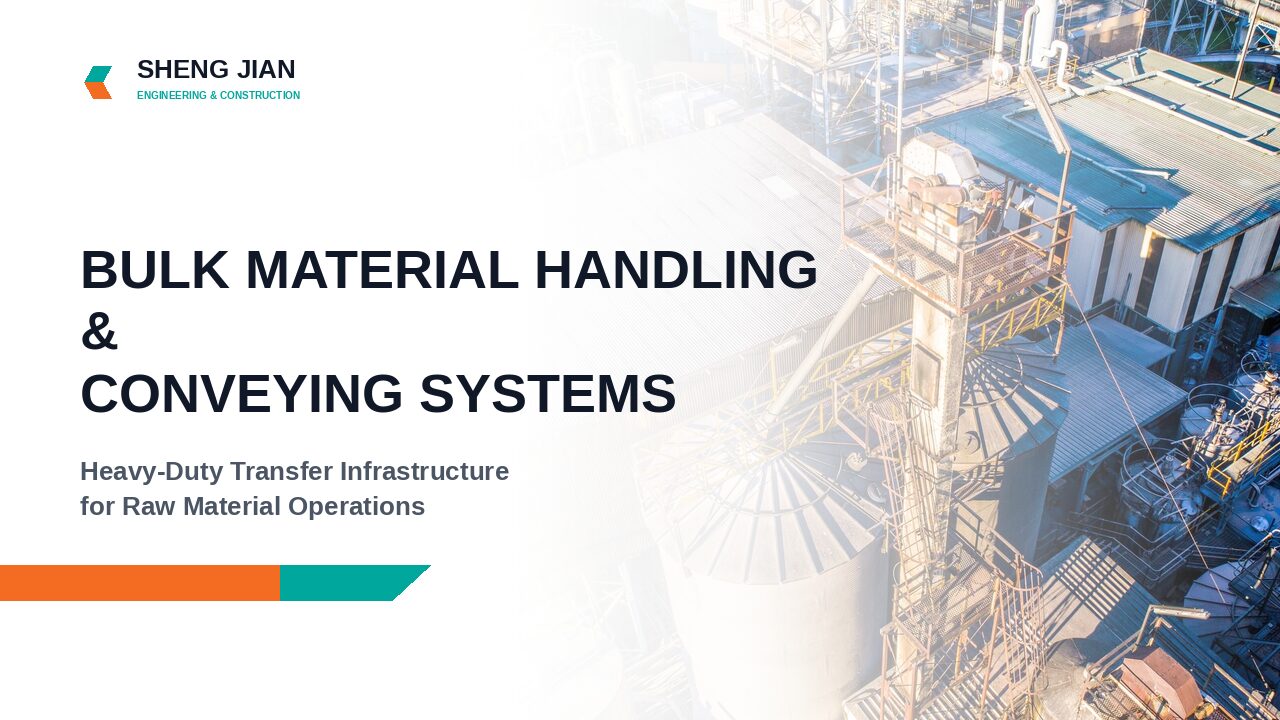
13 Aug Bulk Material Handling & Industrial Conveying Systems
Bulk material handling systems form the operational backbone of heavy industrial facilities, including cement plants, chemical refineries, mining developments, and agricultural processing hubs. Efficiently transferring thousands of tonnes of raw minerals, powders, aggregates, and biomass across extensive plant footprints requires custom-engineered conveying solutions designed for continuous, high-volume operation.
In demanding production environments, conveyor failure or material spillage can cause severe operational bottlenecks, unbudgeted downtime, and safety hazards. Here is an engineering guide to bulk material conveying systems and key considerations for system design.
Core Engineering Pillars of Industrial Conveyors
Designing an effective conveying network requires balancing material bulk density, lump size, moisture content, and abrasiveness with structural durability and power efficiency. A one-size-fits-all approach inevitably leads to premature equipment wear and frequent maintenance halts.
Primary types of industrial bulk conveying infrastructure include:
- Heavy-Duty Belt Conveyors: Ideal for high-capacity, long-distance horizontal and inclined transfer of bulk solids
- Enclosed Screw Conveyors: Designed for dust-tight, controlled volumetric feeding of fine powders and corrosive granules
- Bucket Elevators: Engineered for continuous vertical elevation of heavy materials within compact footprints
- Pneumatic Transfer Lines: Utilized for gentle, sealed transport of delicate bulk solids using compressed air loops
Critical Design & Fabrication Factors
To ensure long-term equipment reliability under severe operating conditions, several critical factors must be engineered into the system during fabrication:
- Abrasion Protection: Lining conveyor troughs and drop chutes with high-grade chromium carbide overlay plates or stainless steel liners
- Drive Mechanism Selection: Integrating energy-efficient gearmotors and heavy-duty drive assemblies from global leaders like SEW-Eurodrive
- Dust Containment & Environmental Safety: Installing enclosed skirting systems and dust extraction hoods to comply with local industrial hygiene rules
- Structural Support Trestles: Fabricating rigid steel gantry structures engineered to withstand dynamic mechanical vibrations and wind loading
Turnkey Material Handling Solutions with SJEC
At SJEC, we specialize in designing, fabricating, and erecting custom bulk material handling systems tailored to your plant’s exact layout and throughput requirements. From structural steel support trestles to heavy conveyor casings, our engineering team ensures seamless execution.
Discover our full scope of industrial capabilities on our factory construction page or connect directly with SJEC to discuss your material handling needs.
FAQs
What types of conveyors are used for bulk material handling?
Common systems include heavy-duty belt conveyors for long-distance transfer, enclosed screw conveyors for controlled powder handling, bucket elevators for vertical lifting, and pneumatic conveying systems for sealed transfer of suitable bulk solids.
What factors determine the design of an industrial conveying system?
Conveyor design depends on the material's bulk density, particle or lump size, moisture content, abrasiveness, required throughput, transfer distance, elevation changes, dust-control needs, and the structural loads imposed on the supporting steelwork.