


18 Dec Guide to Installing Conveyor Systems in New Facilities
 Industries like manufacturing, mining, and logistics all need a well-designed conveyor system for efficient material handling. But even the most advanced system will fall short without proper conveyor installation. For new facilities, ensuring that conveyors are installed correctly from day one determines how efficiently your operations will run in the years ahead.
As installing conveyor systems involves complex steps, such as layout validation, anchoring, alignment, electrical integration, and final commissioning, a coordinated effort is necessary to ensure everything is in place.
Let’s get into the process.
Why conveyor setup matters from day one
Every industrial operation relies on the smooth flow of materials, which conveyors facilitate. But when conveyor systems are poorly installed, it can lead to higher maintenance costs, increased downtime, and even safety hazards.
A proper conveyor setup ensures:
- Optimised performance across load conditions
- Reduced wear and tear through accurate alignment
- Improved workplace safety via correct guarding and controls
- Longer system lifespan, lowering replacement costs
For factory owners and engineers, installing conveyors correctly means securing the foundation of your material handling process before production even begins. As it can be a complex process, partnering with experienced conveyor installation companies ensures that each step is carried out safely, efficiently, and to specification.
Key steps for conveyor installation in new projects
A proper conveyor installation comes with following a structured process that’s fine-tuned to the project’s scale and type of material being handled.
1. Layout confirmation and site preparation
Before assembly starts, engineers review the site layout to ensure sufficient space and clearance for conveyors, catwalks, and access points. This is the stage to resolve any conflicts with foundations, trenches, or building columns.
Proper site preparation, such as levelling floors and verifying anchor points, prevents later rework or alignment problems.
2. Mechanical assembly and structure anchoring
Once the groundwork is ready, technicians begin assembling the conveyor’s frame, belts, pulleys, and drive units. The system is then anchored securely to its foundations. Weak or uneven anchoring can cause vibration, noise, or system drift over time.
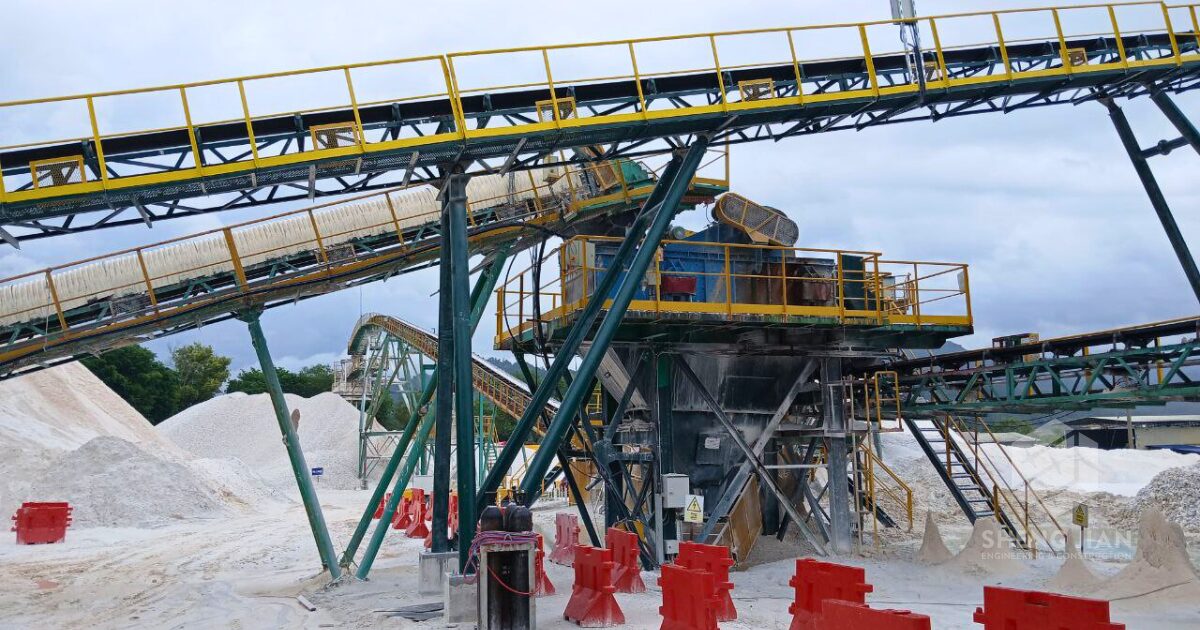
In many industrial projects, conveyor setups are integrated with steel structures, requiring close coordination between fabrication and installation teams.
3. Electrical and controls integration
Conveyors depend on electrical systems for motion control, safety interlocks, and process synchronisation. Installation teams must integrate sensors, motors, control panels, and automation components with the facility’s main power system.
Misalignment in this stage, especially in PLC or SCADA connections, can lead to inefficiencies or safety risks.
4. Testing and commissioning
After installation, there are multiple test stages to ensure the system is ready for operation.
- Dry runs: To verify motion and alignment.
- Load tests: To assess operational stability under working conditions.
- Safety checks: To confirm that guards, sensors, and emergency stops function correctly.
The exact tests will vary depending on the conveyor, such as screw vs belt conveyors. But only after these tests can the conveyor system be commissioned for full operation.
Common challenges during conveyor setup
Even with proper planning, some challenges are unavoidable. Recognising them early can help teams respond effectively.
- Space limitations: New facilities often face tight layouts. Modular or elevated conveyor designs can help maximise usable space.
- Coordination gaps: Installation delays commonly occur when mechanical, civil, and electrical teams work in silos. Precise scheduling and cross-team supervision are important here to prevent overlap.
- Environmental factors: Humidity, dust, or uneven flooring can affect system stability, especially in Malaysia’s tropical conditions. Proper surface protection and corrosion-resistant materials mitigate these risks.
- Alignment issues: Minor misalignment during setup can cause your belt to mistrack or even lead to premature component failure. For long-term precision, using laser alignment tools can help alleviate this issue.
Best practices for a smooth conveyor system installation
To make installing conveyor systems as seamless as possible, consider these best practices:
- Identify your ideal conveyor system: Conveyors come in many configurations. Decide early on which conveyor best fits your specific needs.
- Engage your installer early: Let your conveyor provider review site drawings and advise on support spacing and floor load capacity.
- Plan around future scalability: Leave space or modular options for expansion or new conveyor lines later on.
- Document every step: Keep as-built drawings, torque values, and maintenance manuals for future reference.
- Prioritise safety: Ensure that all guards, safety switches, and stop systems are in place before commissioning the conveyor.
Work with trusted conveyor installation experts in Malaysia
A well-installed conveyor system moves materials, and also drives your entire production efficiency, meaning all phases of installation need to be handled with technical precision and local expertise. It’s a complex but necessary process, which, fortunately, a conveyor installation expert can help with.
That’s where SJEC comes in. With over two decades of experience in bulk material handling and conveying system design, fabrication, and installation, we provide end-to-end solutions tailored to your facility’s needs. Our team ensures your conveyor systems are installed safely, accurately, and built to perform for years to come.
Learn more about our capabilities as one of Malaysia’s trusted conveyor installation companies today.
FAQ
What are three common types of conveyor belts?
Belt conveyors, roller conveyors, and slat conveyors are some of the most common types of conveyor belt systems.
Belt conveyors use a continuous belt to transport materials and are widely used across industries. Roller conveyors rely on cylindrical rollers for movement and suit heavier loads. Slat conveyors use slats linked by chains, making them ideal for sharp or hot materials.
What is EP and NN in a conveyor belt?
EP belts use polyester in the warp and nylon in the weft, offering low stretch and good strength. NN belts use nylon in both directions, making them more flexible and impact-resistant.
EP belts are typically used for longer conveyors, while NN suits shorter, high-impact applications.
How can I design a conveyor system?
A good conveyor system design starts with understanding the material type, flow rate, and layout. Afterward, you choose the right conveyor type, calculate belt speed and load, and design support structures. Every step should be tailored to your specific needs to ensure smooth conveyor installation and long-term reliability.